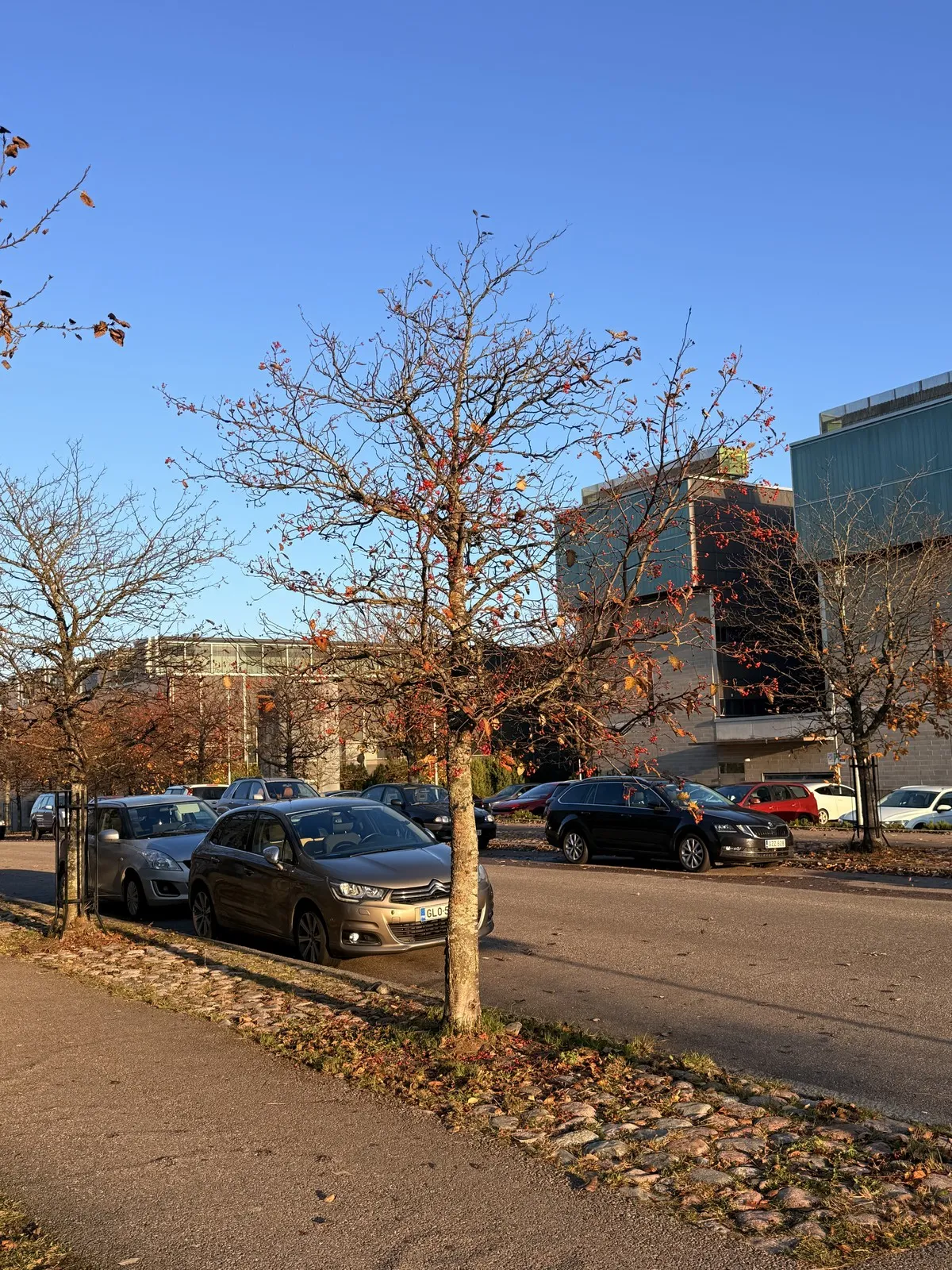
Hello from my home in Helsinki! This is NordLetter #128, a weekly newsletter on living and walking in Finland.
To follow the series, you can subscribe here. A new NordLetter will land in your inbox every Sunday. Not a fan of newsletters? No problem! You can read previous editions here. You can also subscribe to the RSS feed.
You can reach out to me by replying to this mail. I am also posting on Mastodon.
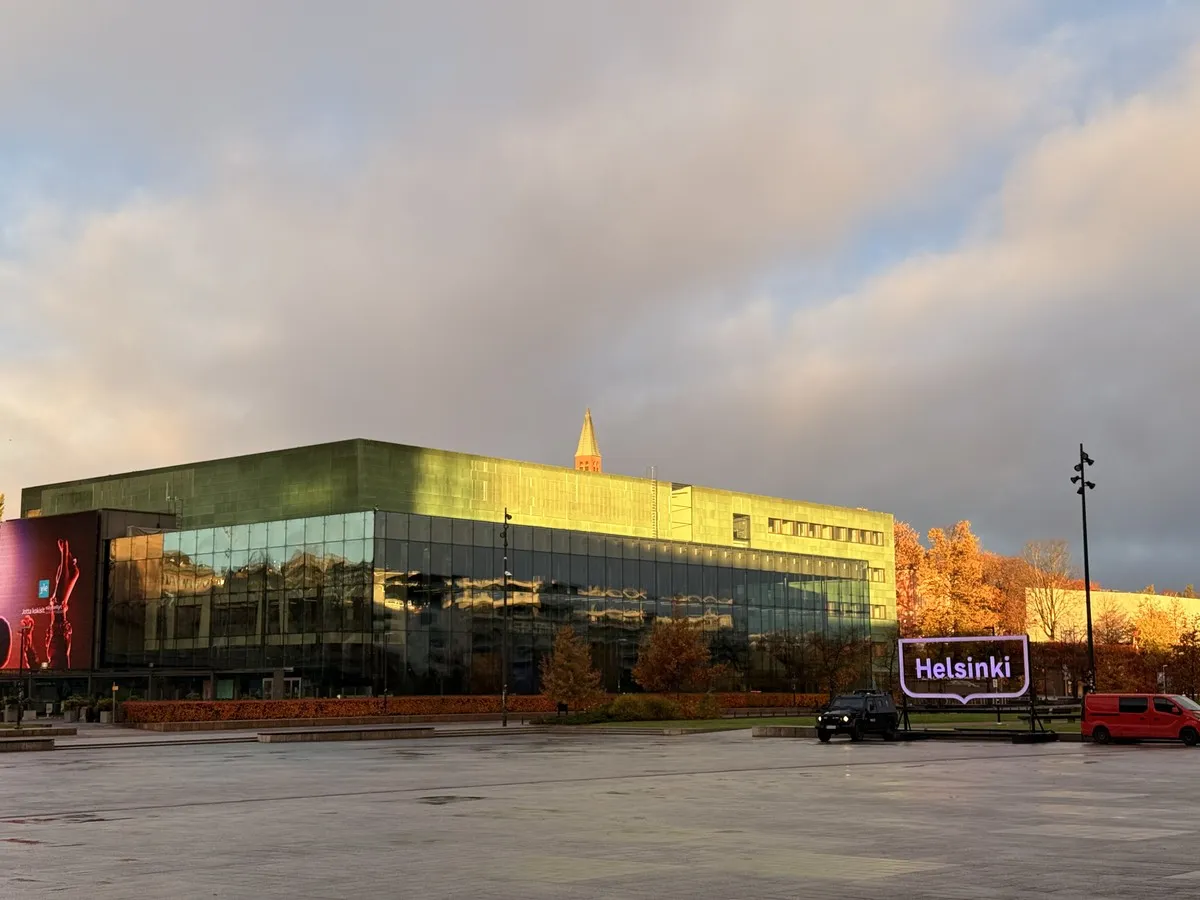 Grey skies and sun peeking through
Grey skies abound.
Yellow trees dot the landscape.
A tram runs through.
Yesterday, I made an avocado-tomato-onion sandwich with spicy coriander chutney. The coriander chutney provides a nice kick to the sandwich and lifts what is a fairly simple dish.
Savya knows about a few dishes - cheela, poha, daal-chawal, pua, bhindi, and so I guess, randomly, he just says those things when we ask him what he wants to eat, or when he’s hungry. Usually, though, he wants to, at the very least, taste whatever we are having.
So yesterday, as we were sitting down to eat, he said, “Mina halua sandwich”, which, given he goes to a Finnish daycare, is how he speaks. Half Finnish, half Hindi/English.
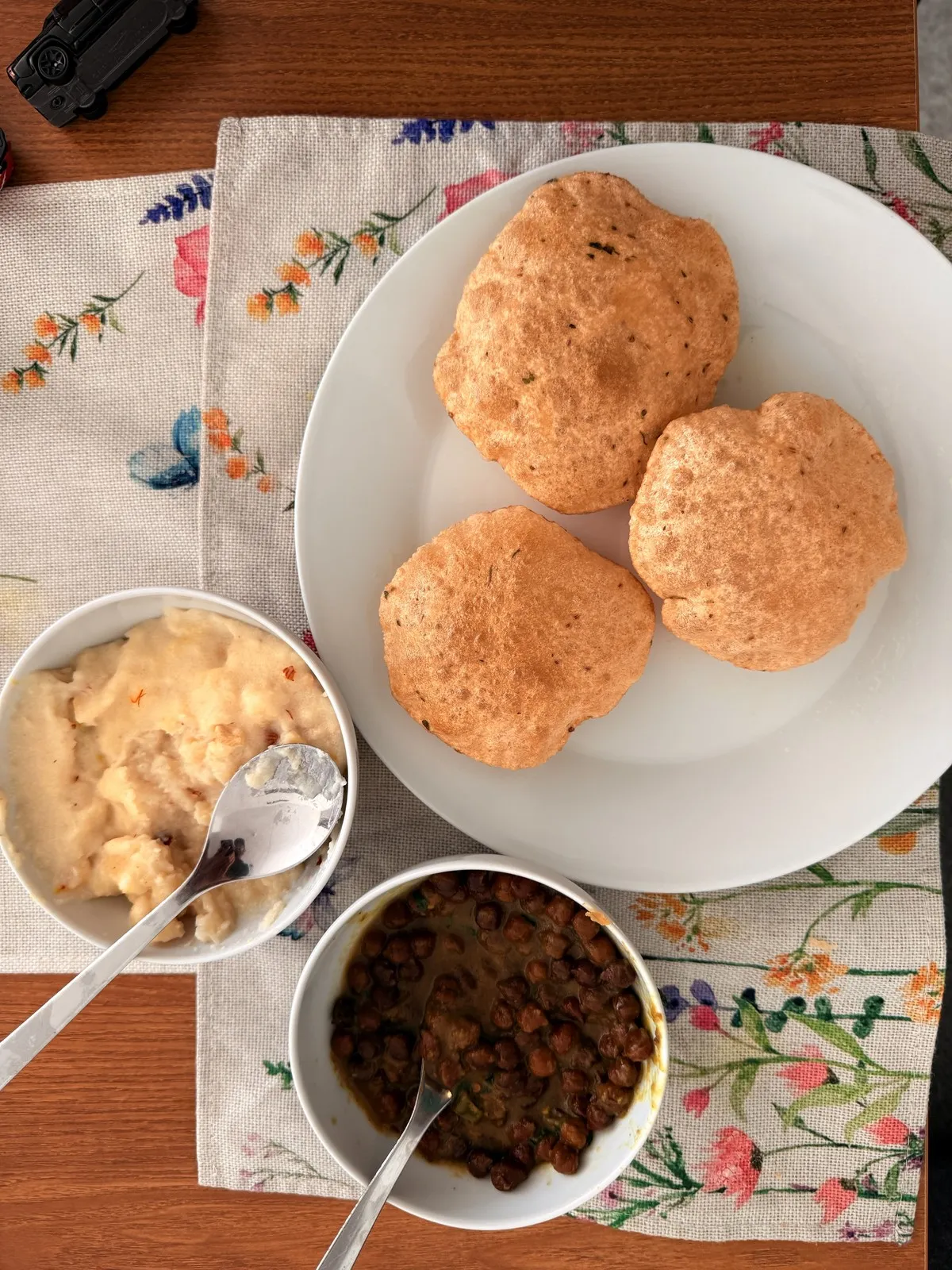 Halwa-Poori-Chana
Halua, of course, sounds like halwa, an Indian dessert. It is made using rava and many other things.
So, I started teasing him, and then, as all Indian parents do, I thought (did not say) that in my time, my mother would make us halwa-cakes and not actual cakes.
And then I started thinking about abundance and scarcity.
Whenever we think about our childhood (maybe we is generalising this too much - you may have had a super-abundant childhood, if yes, then good for you my friend), I tend to feel pride about the things we didn’t have. And how those things have contributed to the person I am today. This rationalisation is obvious, I think (remember, we had read the story of the fox and the sour grapes in our childhood).
We had constraints growing up. I am a 90s kid. We had a black and white TV when we were kids. There were only two channels - DD and National. There were some awesome shows, but nowhere near the options we have now. We would listen to our favourite songs on radios - the joy when your favourite song came on was unbeatable. There was no internet. Heck, I got my first computer when I was in tenth grade at school. There were no tablets. Phones were dumb. I loved playing Snake on the old Nokias. We did not have so many stores, so much crap to eat.
You get the point.
But were all the constraints good, or are we just romanticising stuff?
I was listening to Bill Gates on the Decoder podcast, and Nilay asked him on the show about this. There is a possibility that AI leads us to a world of abundance - robots may manufacture everything, we may cure all diseases, hunger, poverty, etc.
Nilay made an interesting point that the internet created abundance in the digital space, and we just found new ways to make value. The value of a song dropped to zero, but now, most artists are always touring, and they make their money from those things. Also, society has not dealt with this abundance yet - just this digital abundance. How would it deal with this abundance everywhere?
I am reading Inside the Box and it talks about constraints being the way to true freedom. I wrote about it in NL127.
These two forces - constraints and abundance - collided in my head as Savya kept repeating - mina halua sandwich.
Savya is growing up in a world of abundance - or at least more abundance than the one I grew up in. There are hundreds of types of chocolates, cookies, and so on available in any of the supermarket chains near our home. He does not have to step out of the home; he could use Wolt/Uber Eats.
And still, as we raise him, we are putting constraints around him. We don’t give him a phone. We don’t watch TV. We don’t have any chocolates/ice-cream/candies at home. And on, and on.
What would the world look like in the next ten years? What would the world look like when its time for him to join the work-force? Will there exist a work-force then? If robots can do everything, what will humans do?
Young people are struggling with this nihilism right now. If AI can do everything better, why bother? If you find a novel way to do something, AI/capitalism may just take it from you (if there is any value to it).
Bill Gates had an answer - we may decide, as society, that only humans will do certain tasks, even though robots may do them better.
Personally, I don’t believe that we are at the precipice of abundance. As in software development, AI enhances whatever you already have. If you have good processes, AI will make it even better. If you have bad processes, well, good luck to you, dear sirs and madams!
The world we live in is full of inequality and that gap is ever-widening. AI will enhance that.
This is not how I had seen this going when I had started writing this. Oh, well.
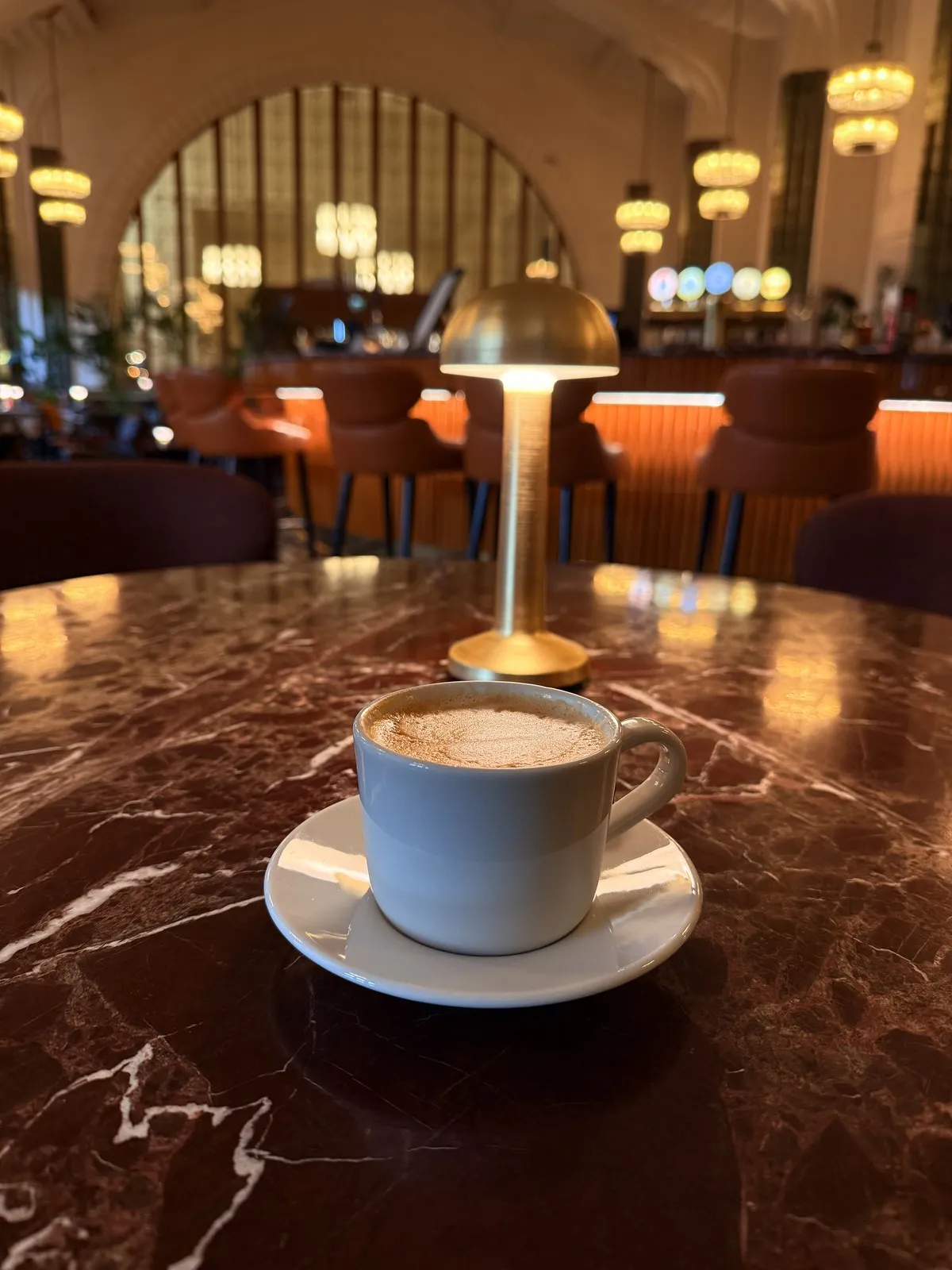 Coffee at a cafe
Finding moments,
In between bigger moments.
I breathe a little.
If you enjoyed reading this, and know someone else who might, please consider forwarding this to them. It would help this grow and make me happy. 😄
Until next week.
Subscribe to NordLetter
A weekly newsletter on living in Finland.