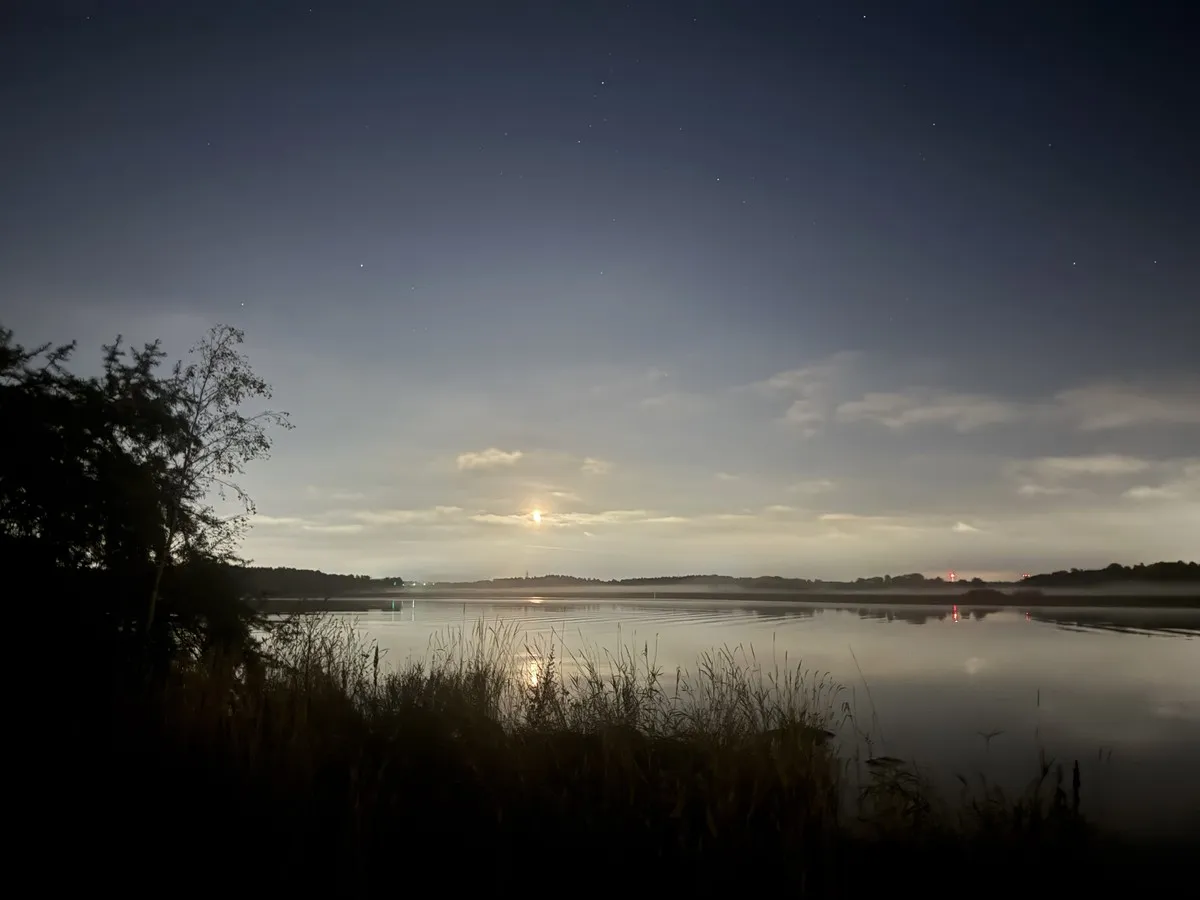
Hello from my home in Helsinki! This is NordLetter #125, a weekly newsletter on living and walking in Finland.
To follow the series, you can subscribe here. A new NordLetter will land in your inbox every Sunday. Not a fan of newsletters? No problem! You can read previous editions here. You can also subscribe to the RSS feed.
You can reach out to me by replying to this mail. I am also posting on Mastodon.
Searching things
A surprising way I use my website is for its search function. This was not an original use case for the website, the why of the thing. (I don’t think I ever wrote the why of my website down anywhere. I mean, there is a doc which talks about the how of the thing, the inspirations I’ve had and so on. I just skimmed it, there is no why section there.)
I use Obsidian to write. It has a built-in search functionality, but on Thursday, as I was thinking about this edition, I could not find a note I knew I had. I just left it at that, but I found it today while searching for it on my website.
All this is a roundabout way to talk about emergent behaviour, kind of like in that Ryan Reynolds’ movie where an NPC in a game gets free will. The AI system for the game was not designed for this purpose, but it ended up being that.
I think I’m mixing metaphors here. Anyway.
What I would do differently in my next talk
Serendipitously, through a Simon Willison post this week, I found and read his earlier post on better presentations from way back when (2019).
Some of the things that stood out to him from a course he took:
- Every talk should start with an AIM: Audience, Intent, Message. Who are the audience for the talk? What do you intend to achieve by giving the presentation? With those two things in mind, you can construct the message—the actual content of the talk.
- Try to include at least one STAR moment—Something They’ll Always Remember. This can be a gimmick, a repeated theme, a well-selected video or audio clip. Something to help the talk stand out.
- Presentations are most interesting if they are structured with contrasts. These can be emotional high and low points, or content that illustrates what is compared to what could be. Sparklines are a tool that can be used to think about this structure.
- The human brain is incredibly attuned to stories. If you can find an excuse to tell a story, no matter how thin that excuse is, take it.
I have been thinking about presentations and talks as well, perhaps because I gave one recently, but more pertinently, because I have seen and heard so many people give talks now that I have an opinion.
My list of best practices for presenting things is thus:
- Less text on the slide. Just pointers not descriptions. A person viewing should be able to skim quickly. This is not a SOP document.
- Have a demo. Demos are fun.
- If you include diagrams, they should be visible, i.e. the text should be visible.
- Consistent design language. Don’t jump from one style to a different one. I prefer minimalist styles.
- Pick a topic based on the audience. A super technical presentation will be difficult to pull off. Generally speaking, it’s easier to do overview sort of talks. But if the audience is expecting a deep dive, do not be afraid to do so.
I was at the Azure and Friends September meetup at the Microsoft office this week, and as I sat through Miska Kytö’s talk on cyber security, I wondered why I was liking this talk so much.
That speaks as much to the speaker as it does to me - the listener. Context matters. And perhaps this is my community and the things I am good at.
As is the custom in our household, Prerna asked me if I was interested in giving a longer talk at the next PyData event, happening sometime in October. I said no, of course. But I started thinking about my next talk nonetheless.
You heard it here first - I will be talking about doing local inference sometime soon. The upcoming CNCF meetup will have some talks on this very same topic, so that should be fun.
I thought about two things after I read the Simon Willison post:
- How awesome would it be to go through this class? (I searched, and no, it’s not available online)
- Public speaking is a skill, and like every other skill, one can work on it and improve.
Ghost-Eye
I finished reading Ghost-Eye this week. I had known of Amitav Ghosh from before, from books whispered here and there, like a book on climate change he had written recently - a book I have not read yet. So, when I saw Ghost-Eye pop up in the e-library, I immediately put it on hold.
I am not a Bengali, so I can’t say that it took me back to my childhood days in Calcutta. And yet, it did. It took me back to the streets of J&K block in Laxmi Nagar in Delhi, where I used to live as a child. It took me back to the time I stood in the street and heard an aunty who lived in the building opposite to our own, tell us tales about her village and the spirits that lived there.
This is a book about reincarnation, but also the world we are living in, about cooking (fish specifically) but also the art of cooking. And everything ties off beautifully by the end - the aha moment.
I loved reading it. The characters are so well written. Give it a read.
Like a river
I feel overwhelmed by the amount of stuff that I need to read. It was the same reason I tried current. I did not like the fact that it took the control away from me, but I liked the concept of it.
Oliver Burkeman talks about this in his post here.
To return to information overload: this means treating your “to read” pile like a river (a stream that flows past you, and from which you pluck a few choice items, here and there) instead of a bucket (which demands that you empty it). After all, you presumably don’t feel overwhelmed by all the unread books in the British Library – and not because there aren’t an overwhelming number of them, but because it never occurred to you that it might be your job to get through them all.
This provides the same mental model - something that flows and you just pick what interests you. I have a similar setup on my website (but from a writing context) - between garden and stream.
Some things feel obvious after you read them. This feels like one of those things.
If you enjoyed reading this, and know someone else who might, please consider forwarding this to them. It would help this grow and make me happy. 😄
Until next week.
Subscribe to NordLetter
A weekly newsletter on living in Finland.
Interactions
1 repost from around the web