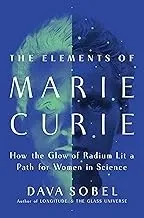
Review
I picked this book because the theme for the month in my Bibliophile group was biographies. I searched from the available books in the library and found this one.
There are two parallel biographies (histories?) going on in this book. One which traces the life of Marie Curie and her journey - from being awarded two Nobel Prizes - one for Physics (with Pierre) and one for Chemistry, to her work in making mobile X-ray machines during the war. The other traces the history of radioactivity and her role in it. I had great fun reading about others working in the field at the time and their meetings - Thompson, Rutherford, Bohr, Einstein. All these names who were (have been) legends to me thanks to the physics lessons in class. It was positively awesome to know that yes these were also people with normal-ish lives.
Marie Curie hired many researchers and scientists to work in her library, who went on to build and discover many things in the chemistry and physics fields. This speaks to the subheading of the book - How the Glow of Radium Lit a Path for Women in Science. I thought it was going to about how her work opened up the path to women in science, generally. But there were many actual practical instances of how she actually did it.
Around the middle of the book, I was bored and not sure why I was reading this. Was I completing it just as a completionist thing. But then the war started and the book got interesting again.
Over time, it becomes easier to forget all the work, the people on whose shoulders we stand now. That’s why I enjoy reading these books. They tell us that all progress is slow and gradual.
Notes
Marie was Polish. She was also know as Mania in her early childhood.
How was the atomic weight measured?
There are multiple instances in the book talking about women other than Marie Curie who at one time or the other join the lab. This speaks about the subheading of the book - How the Glow of Radium Lit a Path for Women in Science.
There was a woman for example who had to quit the sciences and at a later point spoke about how women were not suitable for becoming physicists. This same woman had fought for being allowed to work and had broken off her engagement when she was told she could not in an earlier time.
Paths into this note
2 notes lead here
-
This book is Tove Jansson's autobiography. The same Tove Jansson who wrote and created Moomin characters. I had originally planned to read this during the biography month at TCS' Biblio Group. But it wasn't available then. So I had read The Elements of Marie Curie instead.
-
I’m reading a biography of Marie Curie right now.