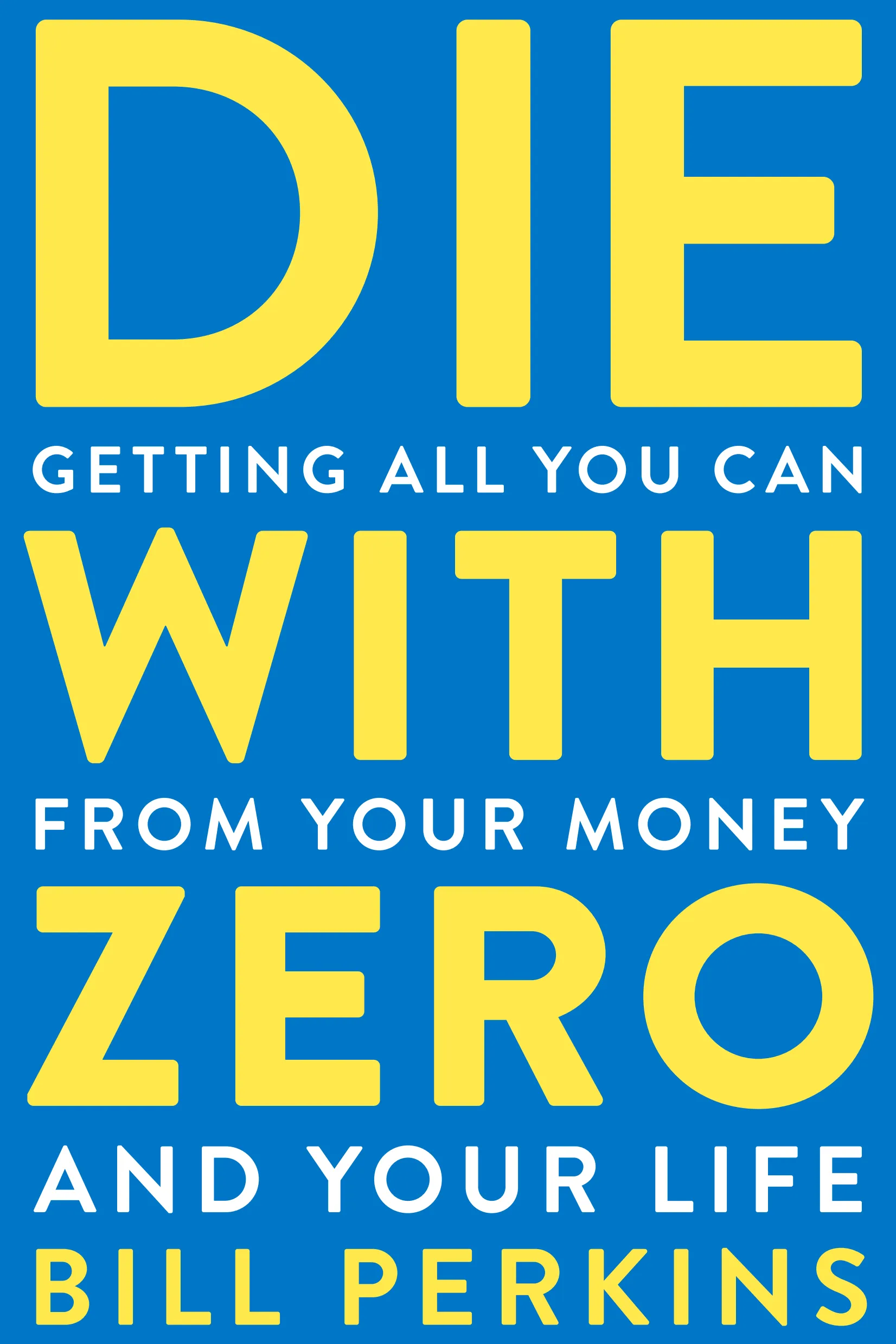
Die with zero
Review
Like Bird by bird, I started reading this book thanks to this post on Gina Trapani’s blog. That’s the beauty of books and blogs and sharing things that books teach us. It may inspire the reader to pick up the book as well.
This felt like a book which could have been a blog post, or a long essay. I could have felt that way also because it took me longer than expected to finish this book. I had other things to do - books I liked more, work, and so on.
The core idea of the book is this - we must prioritise net fulfilment over net worth. Instead of continuing to work, we must decide how much money is enough, and then stop earning and start spending it.
See, our health declines as we age. There are lots of things that we want to do. Some of them we may not be able to do as we age - skiing, scuba-diving and so on.
Why wait? Do the things now. Some ideas that were a bit of a shock were the ideas around giving money away now - to charities, to our kids perhaps.
Overall enjoyed reading the book. It gave me a new way to look at personal finance and how to optimise for experiences instead of accumulating more money.
Notes
Living as if your life were infinite is the opposite of taking the long view: It’s terribly shortsighted.
Although we all have at least the potential to make more money in the future, we can never go back and recapture time that is now gone. So it makes no sense to let opportunities pass us by for fear of squandering our money. Squandering our lives should be a much greater worry.
Annuities are insurance against longevity risk, that is, you living longer than your savings. You are paid a fixed amount of money after you retire till the day you die.
If you’re really putting your kids first, as you claim you are, don’t wait until you’re dead to show your generosity. (I like to say that dead people can’t give money away—they can’t do anything.) Putting your kids first means you give to them much earlier, and you make a deliberate plan to make sure that what you have for your children reaches them when it will make the most impact. A real plan for dying with zero includes the kids, if you have kids. That way, you’ve already separated out their money (which becomes untouchable by you) from your money, which is what you must spend down to zero.
I was thinking about this recently. We had thought we would have a fund for Savya where we would put a certain amount each month. Savya will get it when he will be old enough. The second thought was this - this will be Savya’s money, not our investment. That gave me a pause. If we live here in Finland, we don’t have to save for higher education. It will be free for him, when he grows up. So then what’s the point. Reading this book, has made me reconsider these feelings and thought. Why wait till I die to leave him something. Why not give him this at the start of his career for example, when he needs it most.
Once you have enough money to take care of your family’s basic needs, then by going to work to earn more money, you might actually be depleting your kids’ inheritance because you are spending less time with them! And the richer you already are, the more likely this is to be true.
So you can be generous only when you’re alive, when you have actual choices and their consequences: That’s when you can choose whether to give your money or your time to one thing or another. If you give generously when you’re alive, then I can consider you selfless. If you’re dead, you just don’t have that choice. So by definition, you cannot be generous when you’re dead.
On paying money to earn back time:
If you pay to get out of doing tasks you don’t enjoy, you are simultaneously reducing the number of negative life experiences and increasing the number of positive life experiences (for which you now have more time). How can that not make you happier with your life?
That is what I mean when I say that we die many deaths in the course of our lives: The teenager in you dies, the college student in you dies, the single unattached you dies, the version of you that’s a parent of an infant dies, and so on. Once each of these mini-deaths occurs, there’s no going back.
We all face some version of this question whenever we consider a major purchase. Of course, the dollar amounts differ from person to person, often by orders of magnitude, but the core question is the same for all of us: What’s the best way to spend our money for maximum enjoyment and in order to generate maximum memories?