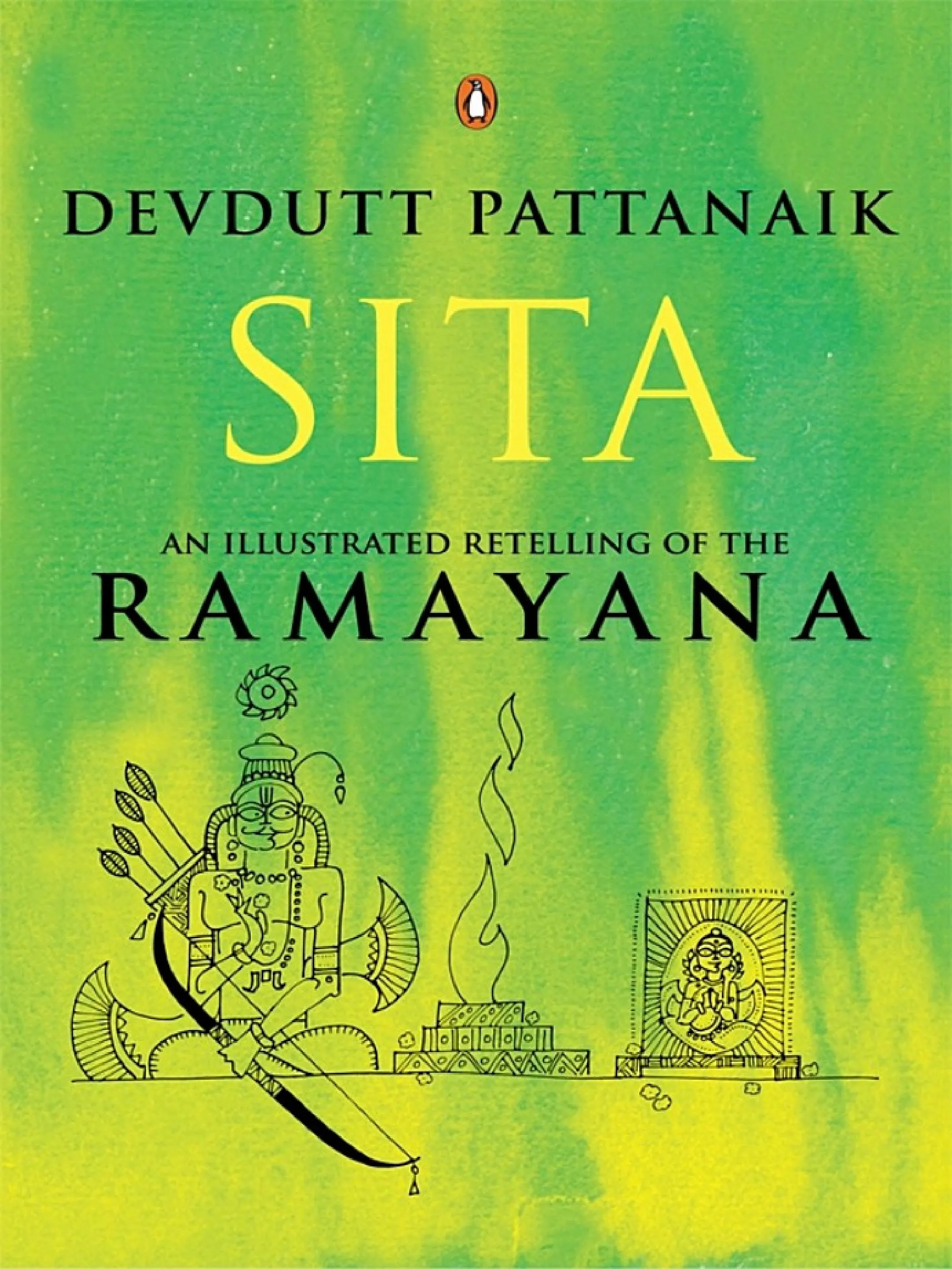
Review
The thing that I always struggle with when it comes to Ramayana is the Uttar Kand - Sita’s banishment from Ayodhya.
A part of the reason is obvious - they love each other so deeply the how is this happening? It is so tragic.
The other aspect is perhaps how this section has been portrayed in media. Or my memory of it in any case. That Sita is sad, that it is an ordeal.
I felt a little bit better about it while reading Sita. There was no dread in this part. There was instead a feeling of freedom. Sita was free from all the wants and responsibilities of being a queen. She chose to love Ram still, as did Ram - putting a gold statue of Sita during the Ashwamedh yagya instead of remarrying.
It did not feel like the end of the world. I could understand it now. Perhaps because I have grown up a bit now.
The story felt more emotional than Mahabharata/Jaya, the book I had read before this.
I was emotional during this entire section - when Ram ordered Laxman to abandon Sita, when Ram talks about his years without Sita, and so on.
I loved reading this.
Notes
‘Every human creates his own imagined version of the world, and of himself. Every human is therefore Brahma, creator of his own aham. Aham Brahmasmi, I am Brahma. Tat tvam asi, so are you. We knot our imagination with fear to create aham. Tapasya and yagna are two tools that can help us unknot the mind, outgrow fear and discover atma, our true self.’
Brahmins were transmitters of knowledge in Vedic times, hence killing them was the greatest of crimes.
The rest of Vena’s body turns into Nishada, founder of the tribal communities who live in the forest, content with subsistence farming and animal husbandry, and who do not have personal property. The narrative draws attention to the difference between tribal and non-tribal societies, and makes us wonder what constitutes civilization. Tribal societies tend to focus on survival and maintenance of the social rhythm of the collective in harmony with nature while non-tribal societies tend to allow disruption of the old order and constantly seek something new either in terms of intellectual or material development often at the cost of nature.
Interesting thought for the book.
Vasishtha told the boys, ‘Before your wife came into your life, you were a student with no claim over property. After your wife leaves your life, you must become a hermit, with no claim over property. Only as long as she is by your side do you have claims over wealth. Without her, you cannot perform yagna; you must only perform tapasya.’
‘Would you rather the tigress starve and die? Who will feed her cubs then? You? This is how nature functions: there are eaters and the eaten. The tiger does not resent the deer that gets away. The doe does not resent the tiger that captures her fawn. They are following their instincts. Plants and animals live; humans need to judge, for we need to feel good about ourselves. That is why we create stories, full of heroes and villains, victims and martyrs,’ said Ram.
Dharma is often assumed to be a set of universal moral and ethical laws. Such universal laws do not exist but are imagined by all humans in every society because humans want them to exist. What exists is universal natural law, where the fit survive using strength and cunning. Social law with its notions of what is right and fair keeps changing with time, with place, with context and with the people involved. The beneficiaries of social law are convinced their laws are fair and right. But those who do not benefit from the same laws reject them and spark revolutions.
During the coronation, Anjana asked her son, Hanuman, ‘You are so strong. You leapt over the sea, defeated Surasa and Simhika, set Lanka aflame, carried a mountain from the north to the south, overpowered Mahiravana. Surely you could have defeated Ravana on your own. There was no real need to build the bridge to Lanka and make all the vanaras fight the rakshasas. So why didn’t you?’
Hanuman replied, ‘Because Ram did not ask me to. This is his story, not mine.’
Sita, seated on Ram’s lap, smiled on hearing this, for she clearly saw how Hanuman saw the world. Most people seek to be the sun around which the world revolves. Very few are willing to be the moon, allowing others to be the sun, despite having full knowledge that they can outshine everyone else. Ram’s brothers served him to uphold the integrity of the royal clan. She too was bound by wifely obligations. But only Hanuman did so out of pure love. That is why Ram held him closest.
The idea that all narratives are incomplete and so no one must be arrogant about their creation is a common theme in Indian stories.
The traditional belief is that whatever Ramayana we know is incomplete. Of the millions of Ramayana narrations available, Shiva narrates the story in a hundred thousand verses, Hanuman narrates 60,000 of these, Valmiki narrates 24,000 and all other poets narrate fewer than that.