Review
I don’t remember where I had received the recommendation to read this book. Maybe I should start making a note of these things now. Anyway, I knew this book was recommended to me when I saw it in the e-library. I usually add a book to favourites, and then pick the first one in the list. For this, I just added it to my holds section straigtaway.
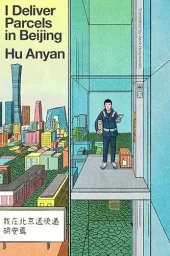
This book is about a courier in Beijing (think a Zomato/Swiggy person in India). It is about that. What he sees and not, how the companies treat him, how he treats his customers and so on. It may not feel interesting, but it was riveting to me. Not in the way a thriller is, but the mundanity of the experience allowed some deeper meaning to come out of it.
I found a few similarities between how I myself approach work at some times. Thought Anyan is a little too pessimistic and conflict-avoiding person. But I don’t want to judge him. He is who he is. This is their experience. That has value.
Have you played Death Stranding? That game is about delivering parcels in a post-apocalyptic barren wasteland. If you enjoyed it, you will enjoy this book. You may enjoy it either way. So go give it a read.
Notes
I had no interest in falling out with my partner and bargaining with him at every turn. But neither did I want to work with someone who was going to take advantage. Imagine finishing later than a colleague every day yet earning less than them—of course I was going to feel irritated and dissatisfied, and at some point, I would stop really caring about the job. There is a reason that deep-sea fish are blind, and animals in the desert tolerant of thirst—a big part of who I am is determined by my environment and not my nature.
At that point I had already started to notice how my work situation was changing me, little by little, making me irritable, prone to anger, unconcerned by my responsibilities. I felt no longer capable of meeting the expectations I had of myself, and I didn’t really want to try to, either.
How they eventually resolved the issue, I never asked. They probably dragged in another unfortunate soul as a backup. I couldn’t have cared less. After my period of leave, I went straight back to my own team without consulting anyone. No one made it into a problem, though, so I got away with it. It turned out that people only bullied those who seemed weak and were afraid of anyone who stood up for themselves.
Why were the managers at the new company better - willing to listen, took an interest?
S Company, being the bellwether of the industry, enjoyed a surplus of human resources and very advantageous labor-management dynamics. The low-level administrators in the company—whose domain was reality and not the utopia of corporate social responsibility its claims suggested—used the company’s enviable position to enforce more thorough appraisals. The result was that Director L and Manager Z’s sense of entitlement made it difficult for me to meet their standards. Pinjun Express, meanwhile, didn’t have the same weight in the labor market that big players like Meituan, Ele.me, S Company, and JD.com used to push staff around. So, the management assumed a humbler manner with regards to its employees. Or, put another way, us workers could speak up more, were actually listened to, and the work atmosphere was freer, all of this without us having to forgo the salary paid by S Company.
Once I had eliminated every other possibility, confirming the parcel had been stolen, I felt all my will to finish the day’s work drain from me. It was like I’d been flattened by a train, and I couldn’t find it in myself to get back up. I have no memory of what happened next, or what I did for the rest of the day. For all I can remember, I stood glued to the spot, in a daze, but I must have gone to the next neighbourhood at some point, then the next one, going through the motions, until I finished my deliveries.
We have all had days like this.
I was seeing the work with new eyes. This wasn’t just about the changes in habit, time, and place. I think it was more being able to approach it with a perspective not permitted to me until then because of the anxiety and stress created by the job—a perspective that was free from direction and purpose. I no longer thought of myself as a parcel-delivery robot that works for thirty yuan an hour and becomes angry and defeated at the first sign I might not meet my delivery quota.
About being kinder and gentler with yourself.
I believe the store really was rewarding me for my work, not only paying for my social security because it had to. I also see that I deserved it. In fact, I speak highly of myself often in this book, with an easy conscience, without awkwardness. I’m just not that kid anymore, always seeking to prove myself, taking hits on purpose so people don’t think I’m being somehow duplicitous. I eventually realized that trying to get everyone to like me was a blind and futile impulse. We all project ourselves onto others—but know there’s no way you can ever convince anyone of your own sincerity. Better still, there is no need to even try with anyone who is sincere themselves.
The moral of this story: When disgruntled, the lowly among us only have each other to pick on, because going after the powerful will only cost us in the end. And if that’s too much, there are always animals.
The unwritten part is where the enormity and weight of a story should reside; and the art of storytelling is in expressing with as few words and images as possible limitless thought and feeling.
As soon as personal interests are involved, relationships between people become much more complicated. Both the sous-chefs were very careful about how they answered our questions, purposefully giving only the bare minimum of details, never more than we absolutely needed to know. By contrast, my security guard colleagues hadn’t hesitated to show me how the escalator worked. Since there was zero skill involved, they didn’t risk being replaced by me once I knew how to do their job.
But, supposing work is something we are compelled to do, a concession of our personal will, then the other parts of life—those that remain true to our desires, that we choose to pursue, in whatever form they take—might be called freedom.
Paths into this note
2 notes lead here
-
I finished reading I Deliver Parcels in Beijing by Hu Anyan. It is exactly what it says in the title - experiences of a man who delivers parcels in Beijing. There are so many things I have underlined in this book.
-
What am I reading now? I Deliver Parcels in Beijing and All that we see or seem. I will have the reviews up soon enough.